Secure user access
Give customers, partners or staff the right information and actions.
Interactive software for the browser
A website presents information. A web application lets people sign in, work with data, complete transactions and operate a service.
Problems we solve
Web applications support repeatable tasks, secure access and business rules that a brochure website is not designed to handle.
Give customers, partners or staff the right information and actions.
Move booking, management and approval processes into a consistent system.
Use databases and dashboards instead of static pages or emailed files.
Integrate payments, communications and third-party platforms through APIs.
What we deliver
We design the browser experience alongside data, security, business logic and deployment.
Our approach
Data structure, permissions and failure states receive the same attention as the interface.
Define roles, information and rules before the interface hardens assumptions.
Make complex journeys visible and testable early.
Implement application, backend, integrations and administration together.
Launch with monitoring and iterate from observed use.
Relevant experience
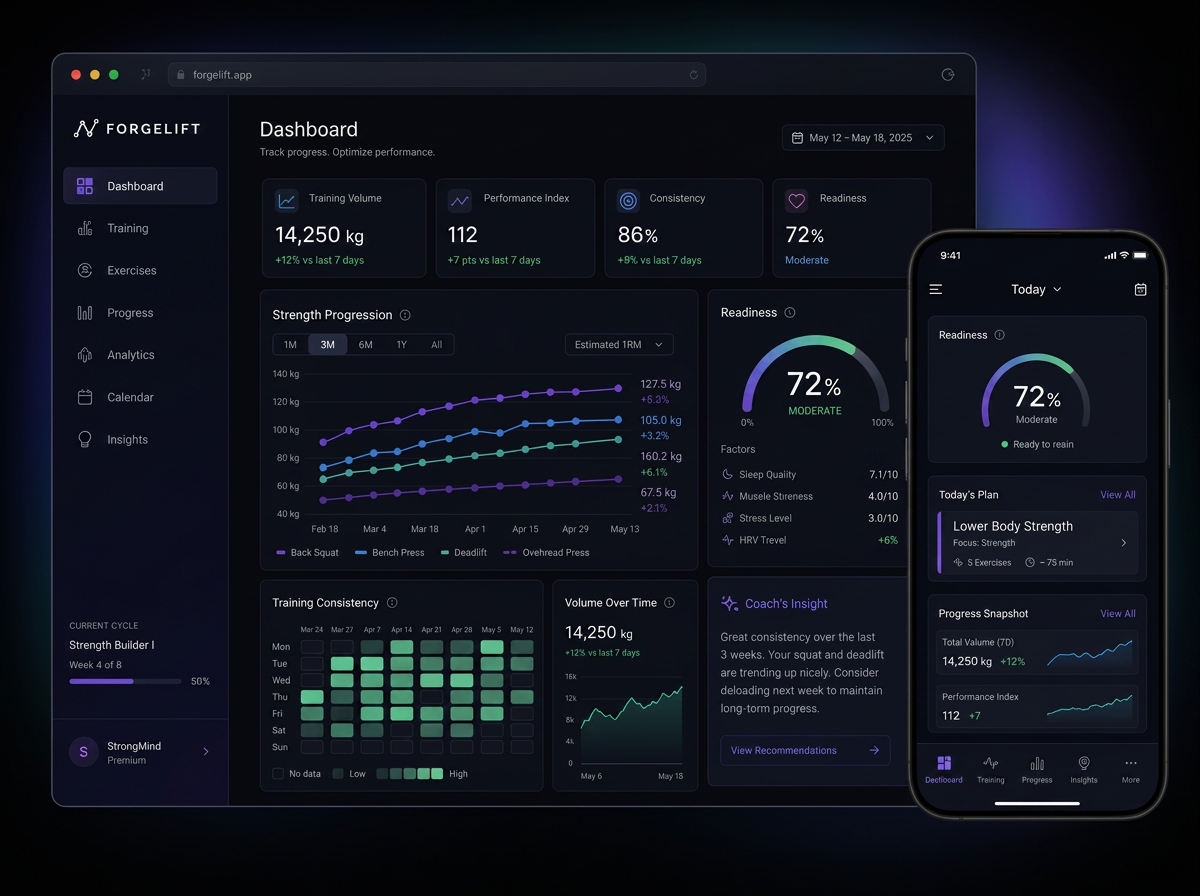
Forgelift demonstrates React, TypeScript, data modelling and progression analytics in an interactive web product.
Related services
We build software around business processes that generic products cannot serve effectively without workarounds and repeated manual effort.
We help founders scope, build, test and launch practical MVPs without adding complexity before it has earned a place.
We apply AI where it supports a defined workflow or operational requirement, with clear limits and human review where it matters.
Questions
A website primarily communicates information; a web app lets users sign in, manipulate data and complete ongoing tasks.
Yes. Payments or subscriptions can be integrated where they form part of the product workflow.
Yes. Administration and role-based access are common parts of production web applications.
Where those tools provide suitable APIs or supported integration routes, we can connect them into the workflow.
Next step
We can turn the workflow into a secure web application scope with the right data and integrations behind it.